Case study · Atlas de Mallorca
All of Mallorca, compared with data.
A directory of experiences in Mallorca: 228 activities compared, 56 towns (30 hand-illustrated), rankings based on Google data and a dashboard that publishes on its own, in three languages.
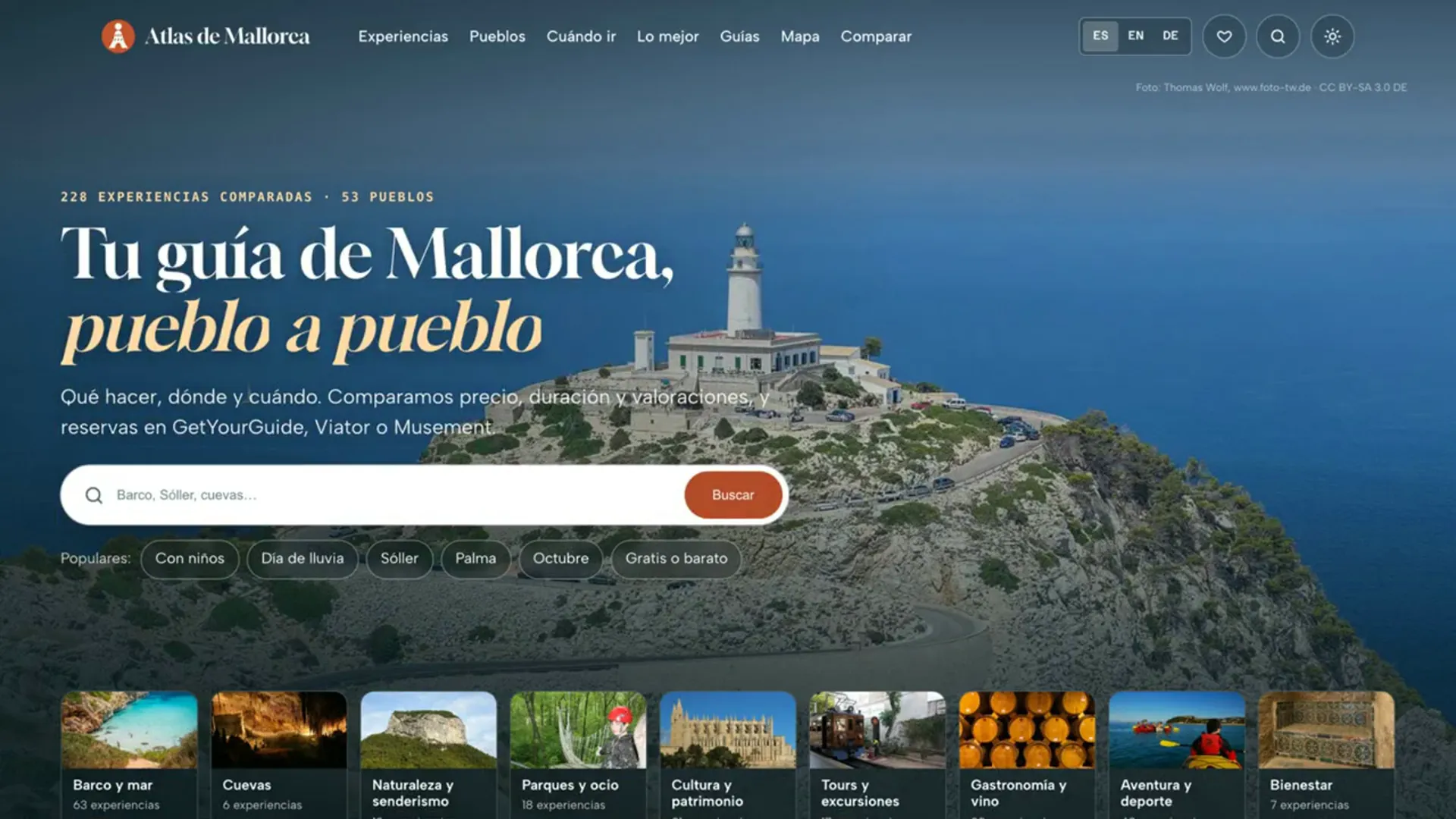
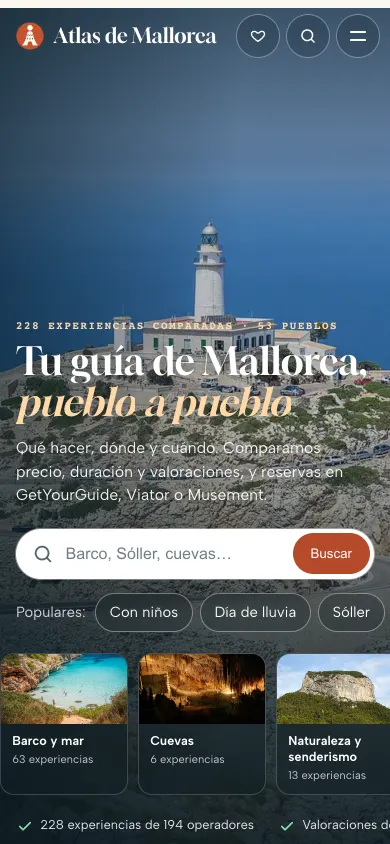
We designed and built Atlas de Mallorca from scratch: an independent directory that compares the island's experiences using public, verifiable data, from the brand and the first line of code to the data in every listing.
- 228 experiences compared, from 194 operators
- 56 towns and harbours, 30 with a hand-drawn illustration
- 13 rankings with a public formula
The challenge
Choosing what to do without opening twenty tabs
Anyone arriving in Mallorca finds hundreds of excursions scattered across agencies, booking platforms and operators' websites, each with its own prices and reviews. Comparing one boat trip with another, or working out what to do on a rainy day, means opening twenty tabs.
The idea was the exact opposite: an independent directory that compares with data and says where each figure comes from, designed from day one in Spanish, English and German, the language of the island's largest tourist market.
What we did
A home page to start choosing
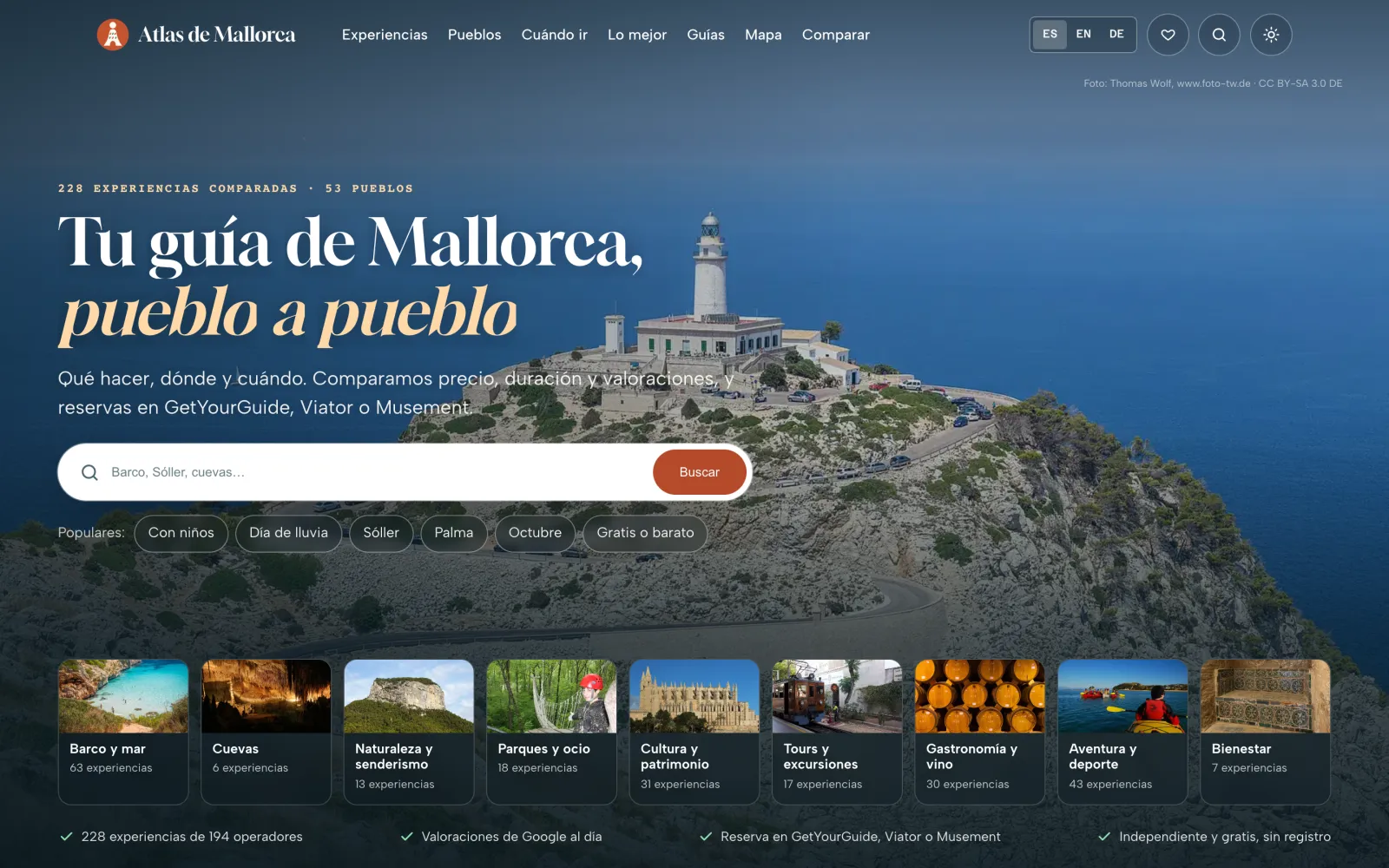
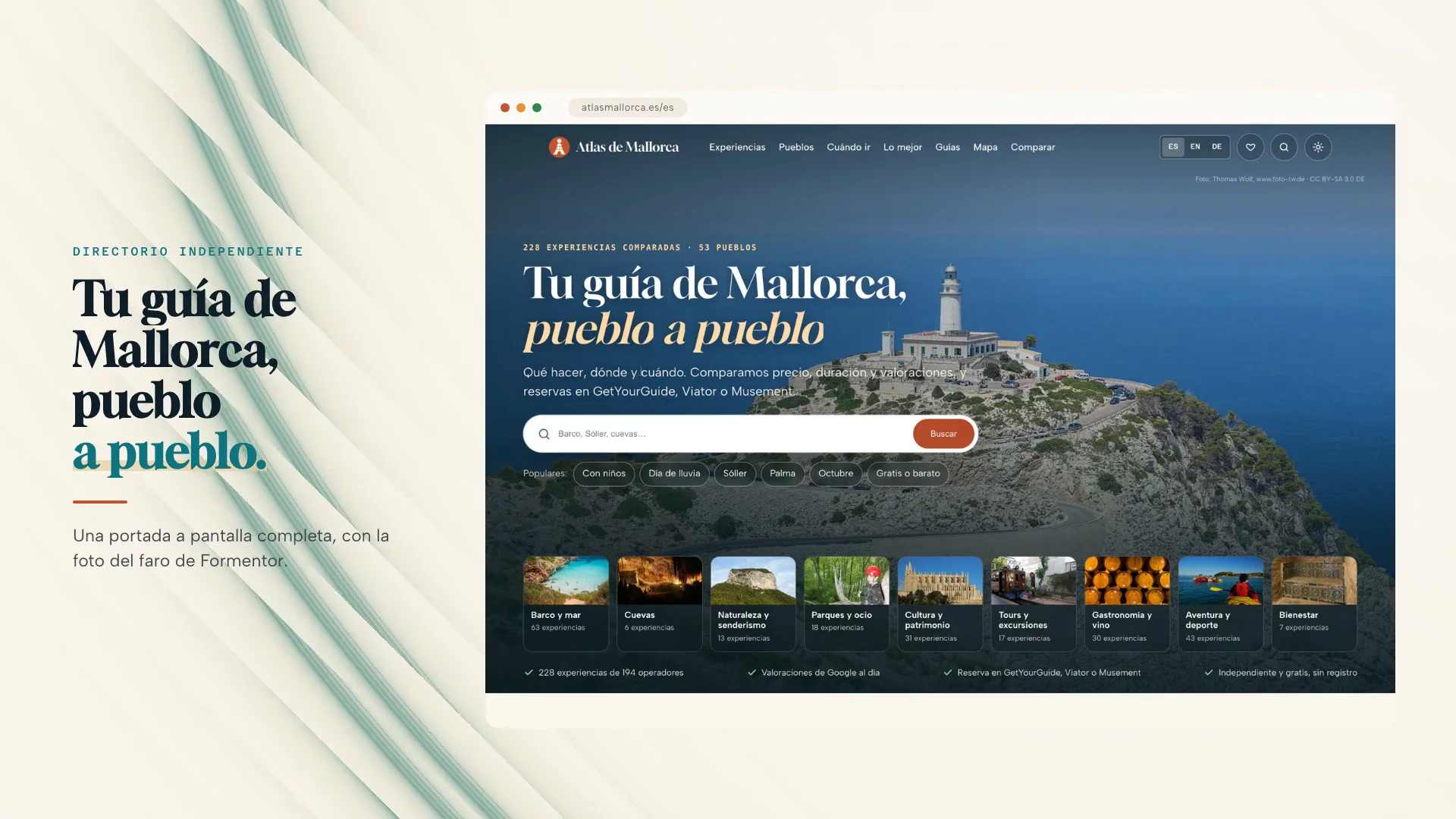
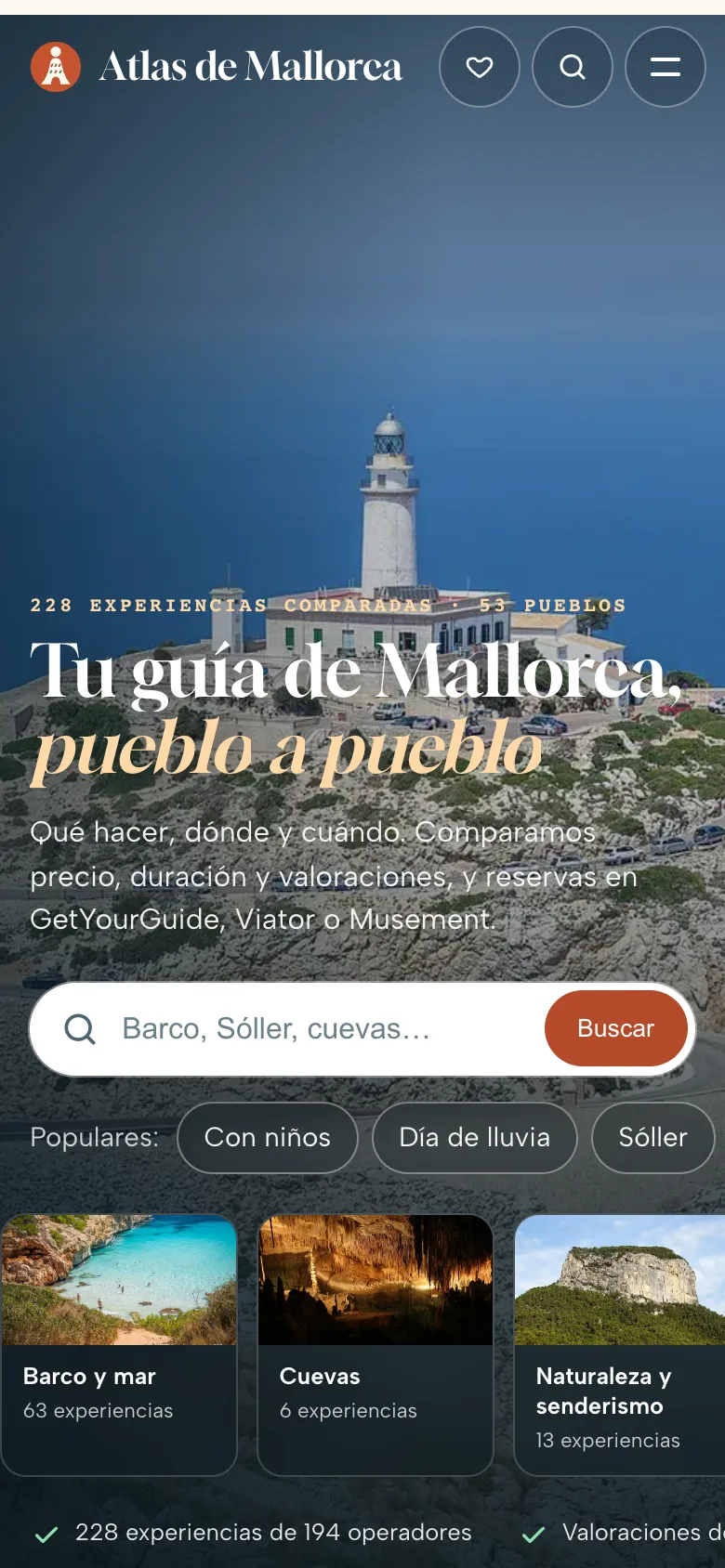
The home page opens full screen with the Formentor lighthouse and a search box that suggests as you type: towns, companies, guides and experiences, with shortcuts for the most common questions, like with kids or rainy day. Below, nine types of plan, each with its photo, and further down the featured experiences, the current month, what you need for the trip, the rankings, the towns and the guides.
We designed the brand, “Atlas de Mallorca”, with a siurell figurine as its logo and the tagline “The whole island, town by town”. Three carefully chosen typefaces (Gloock, Albert Sans and Azeret Mono for the data), light and dark modes, and illustrations drawn in code, with no stock imagery.
Bespoke product · Inside the directory
Seven ways to explore the island
Each section answers a different traveller's question: what to do, where, when, what's best and which one to pick.
-
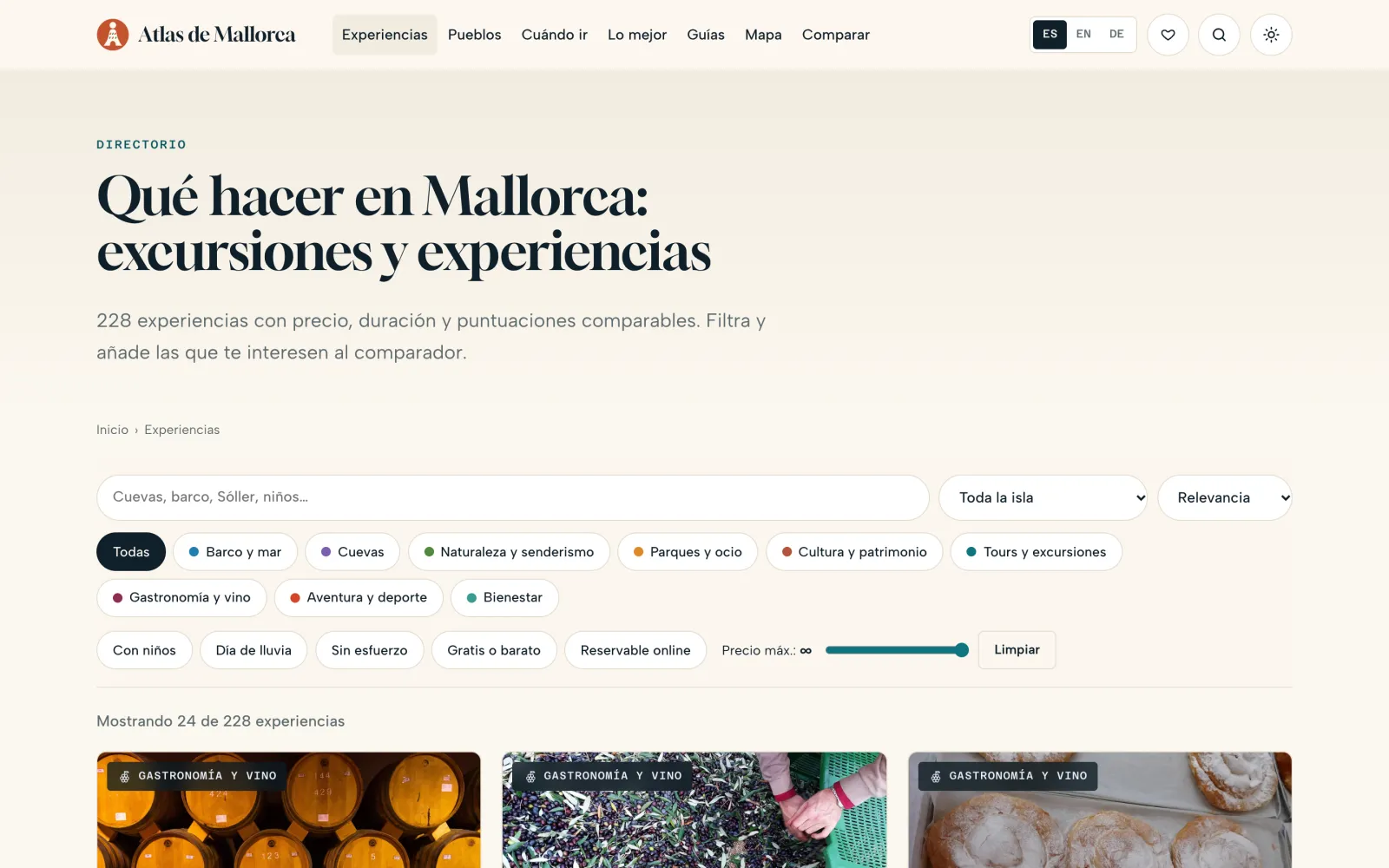
A directory with filters
228 experiences from 194 operators, in 9 categories and 9 areas. Filter by area, price, kids or rainy day, and send them to the comparison tool.
-
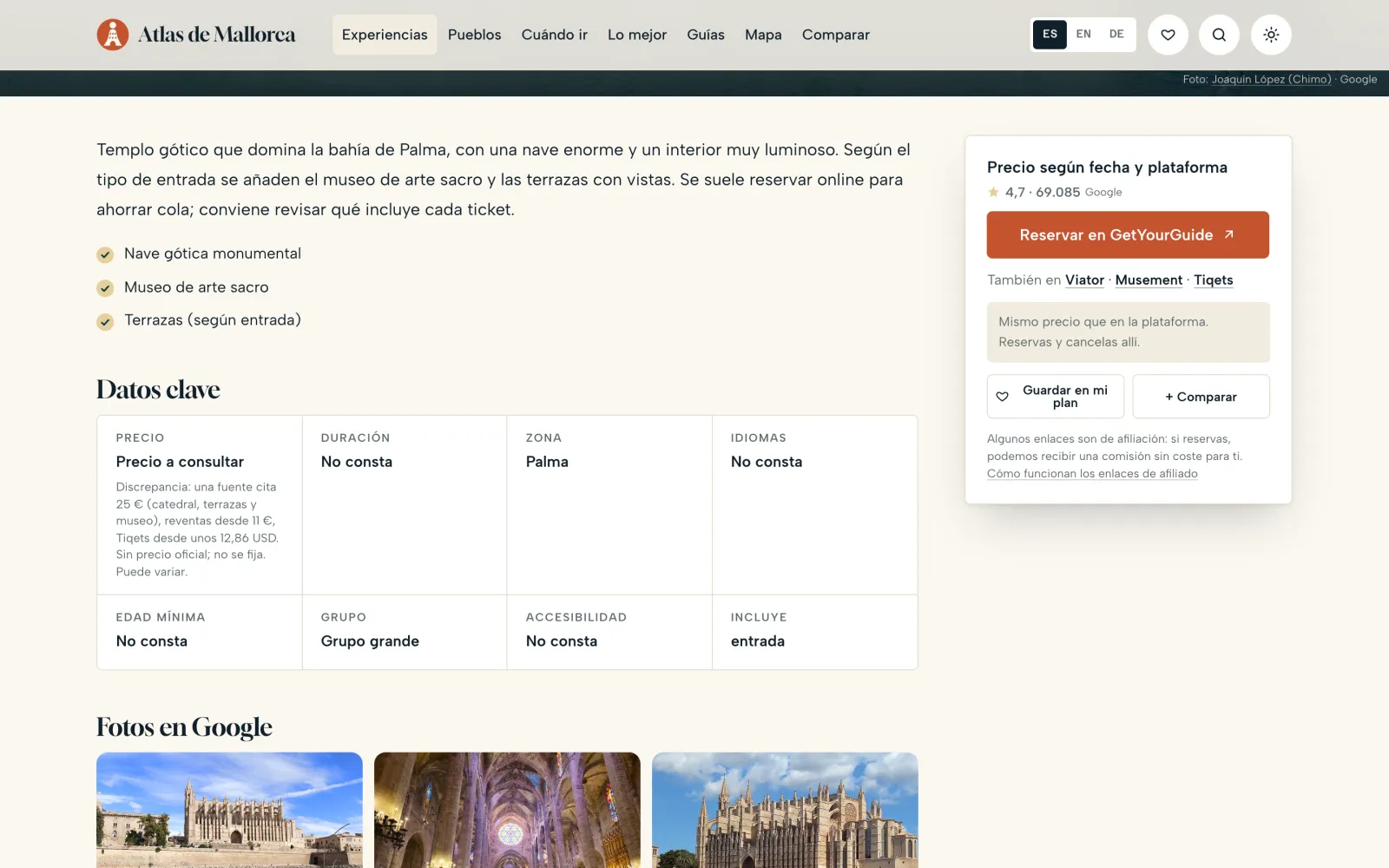
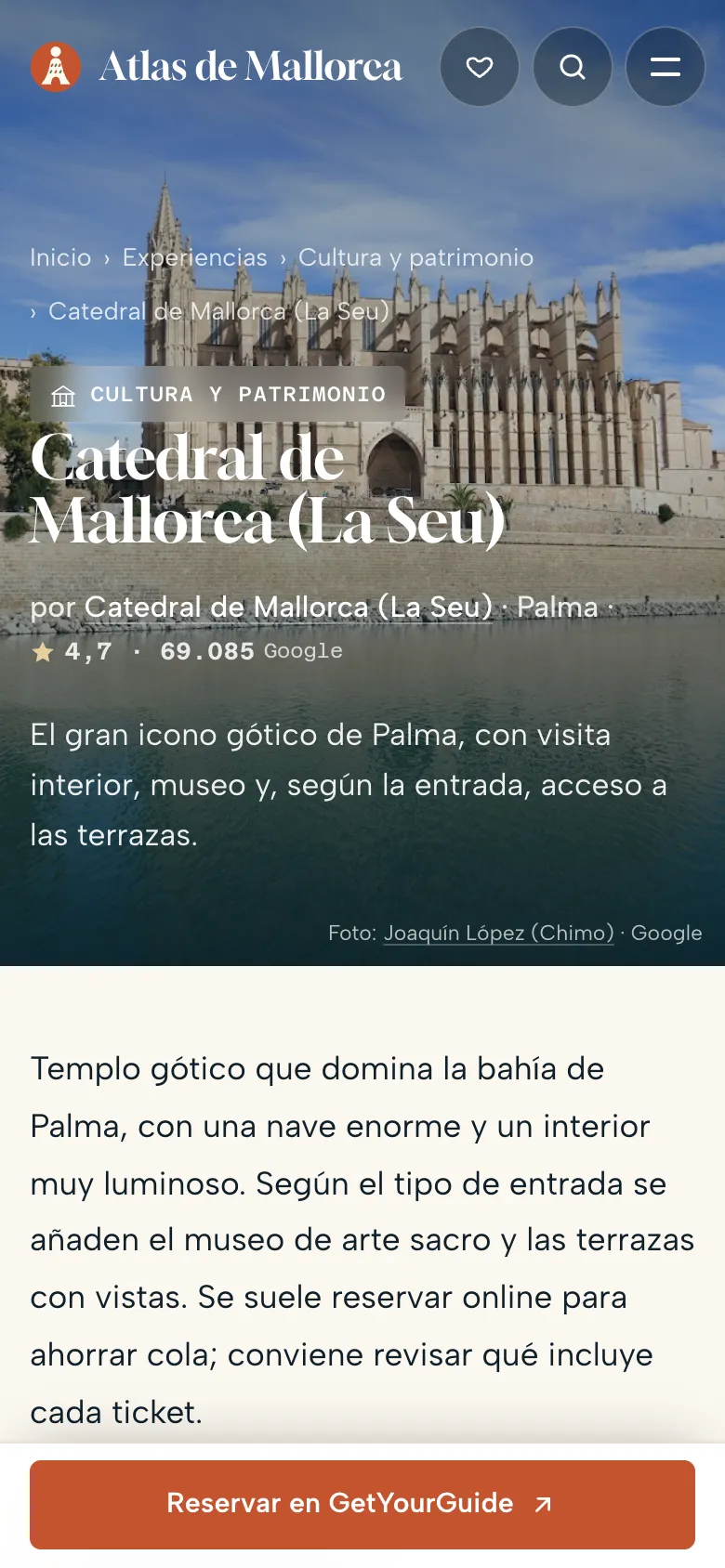
Listings that answer before you ask
What's included, how long it takes, the price when known, the Google rating, effort and family scores, FAQs and where to book: GetYourGuide, Viator, Musement or Tiqets, with availability by date.
-
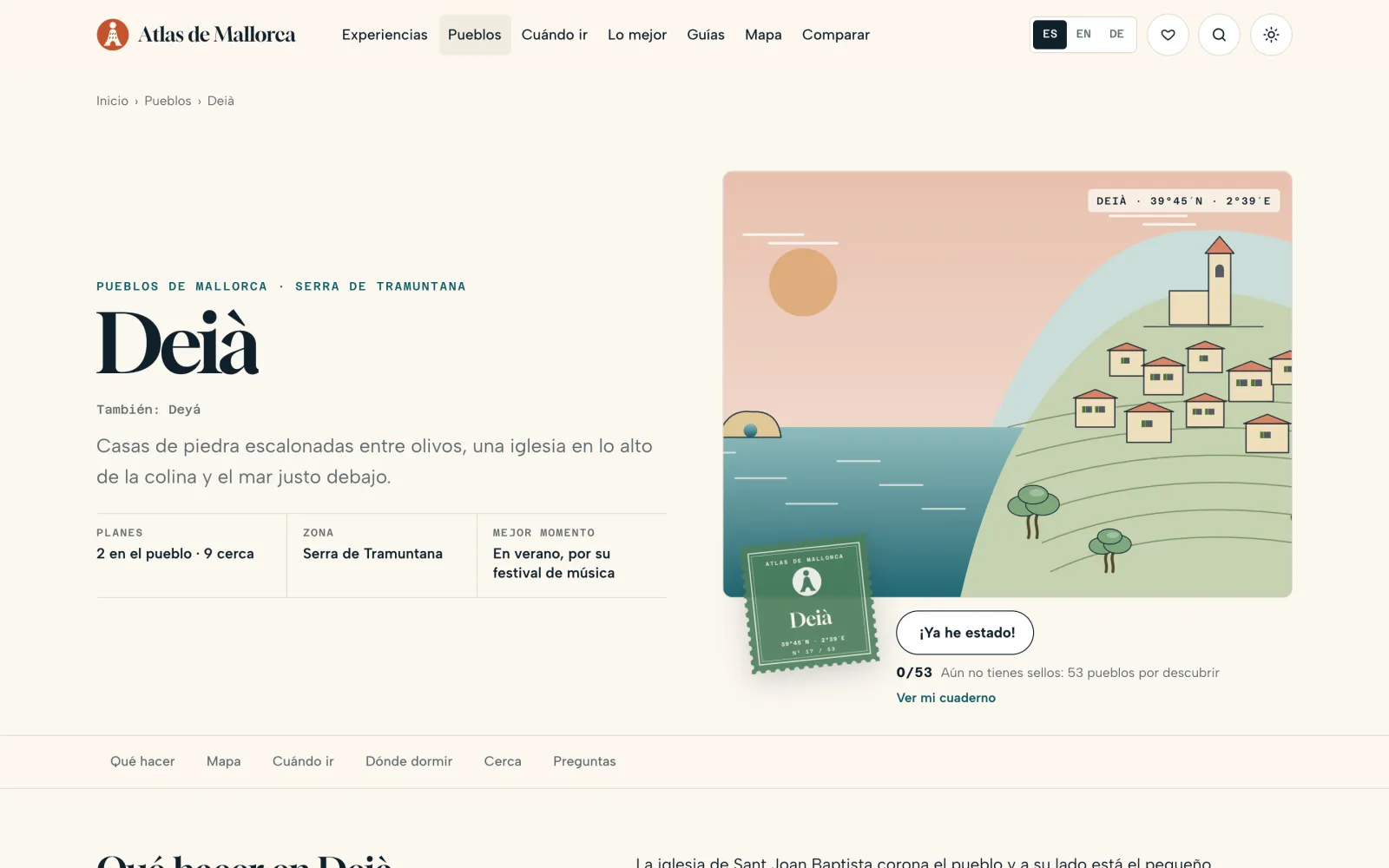
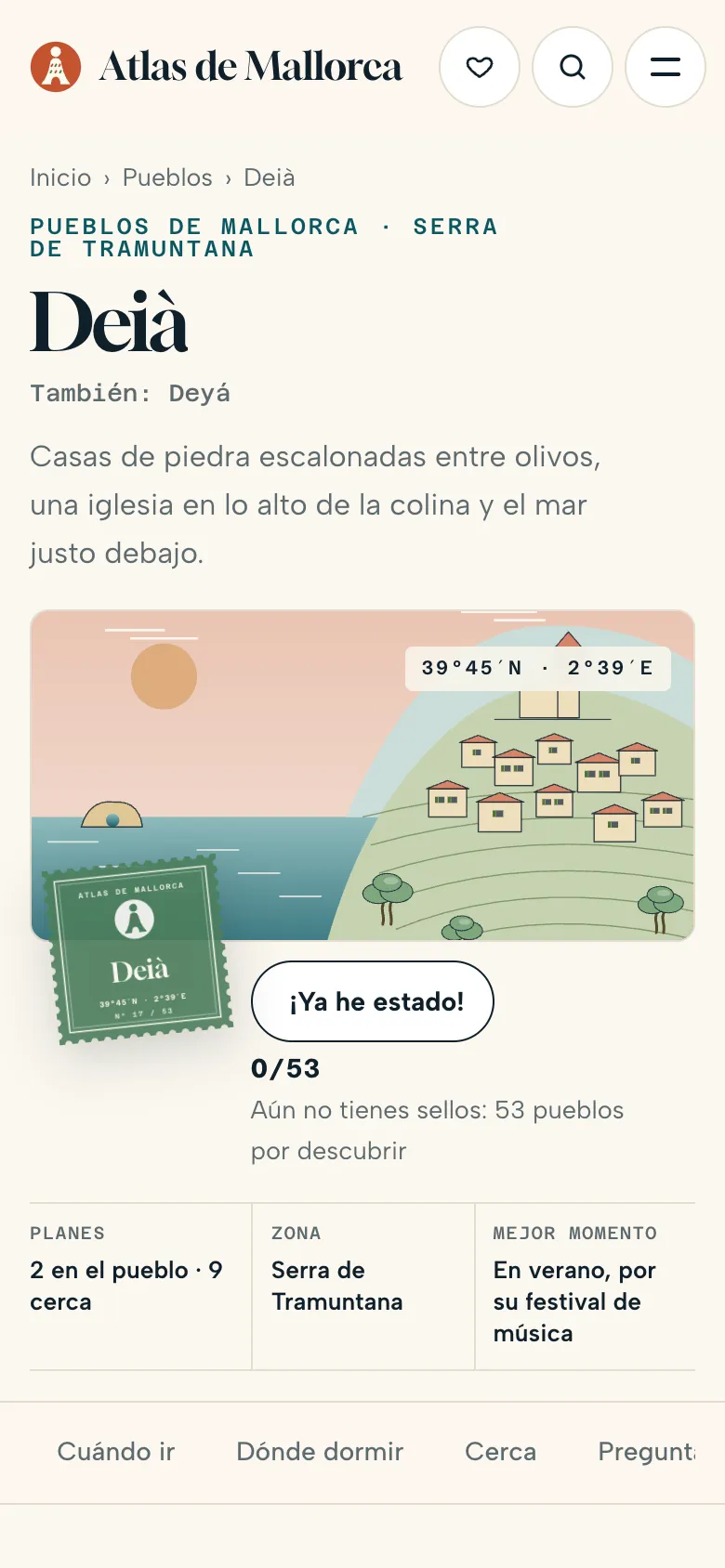
56 towns, 30 illustrations
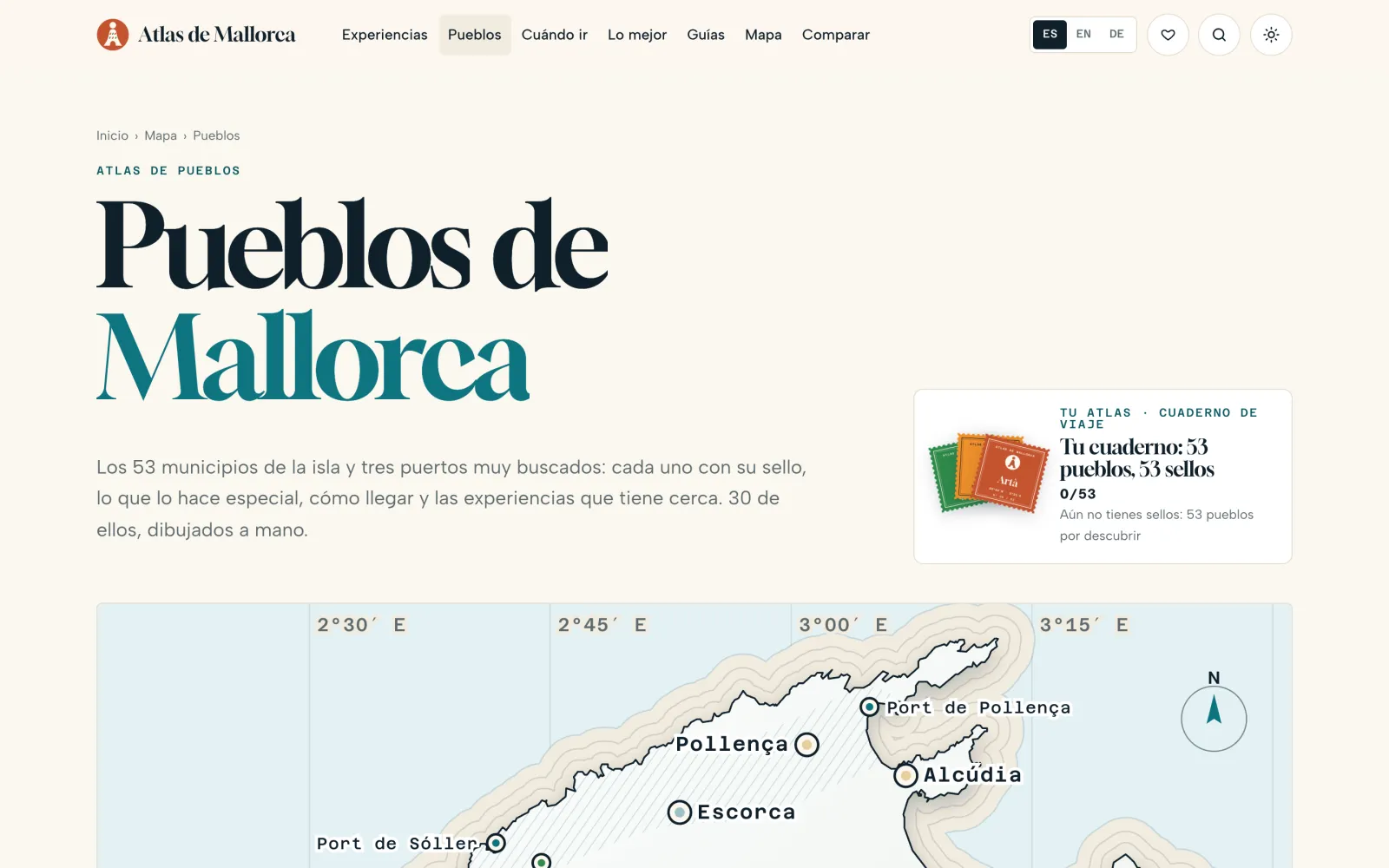
All 53 municipalities and three harbours have their own page, with when to go, a tip from the locals and the experiences nearby. Thirty also have their own hand-drawn illustration.
-
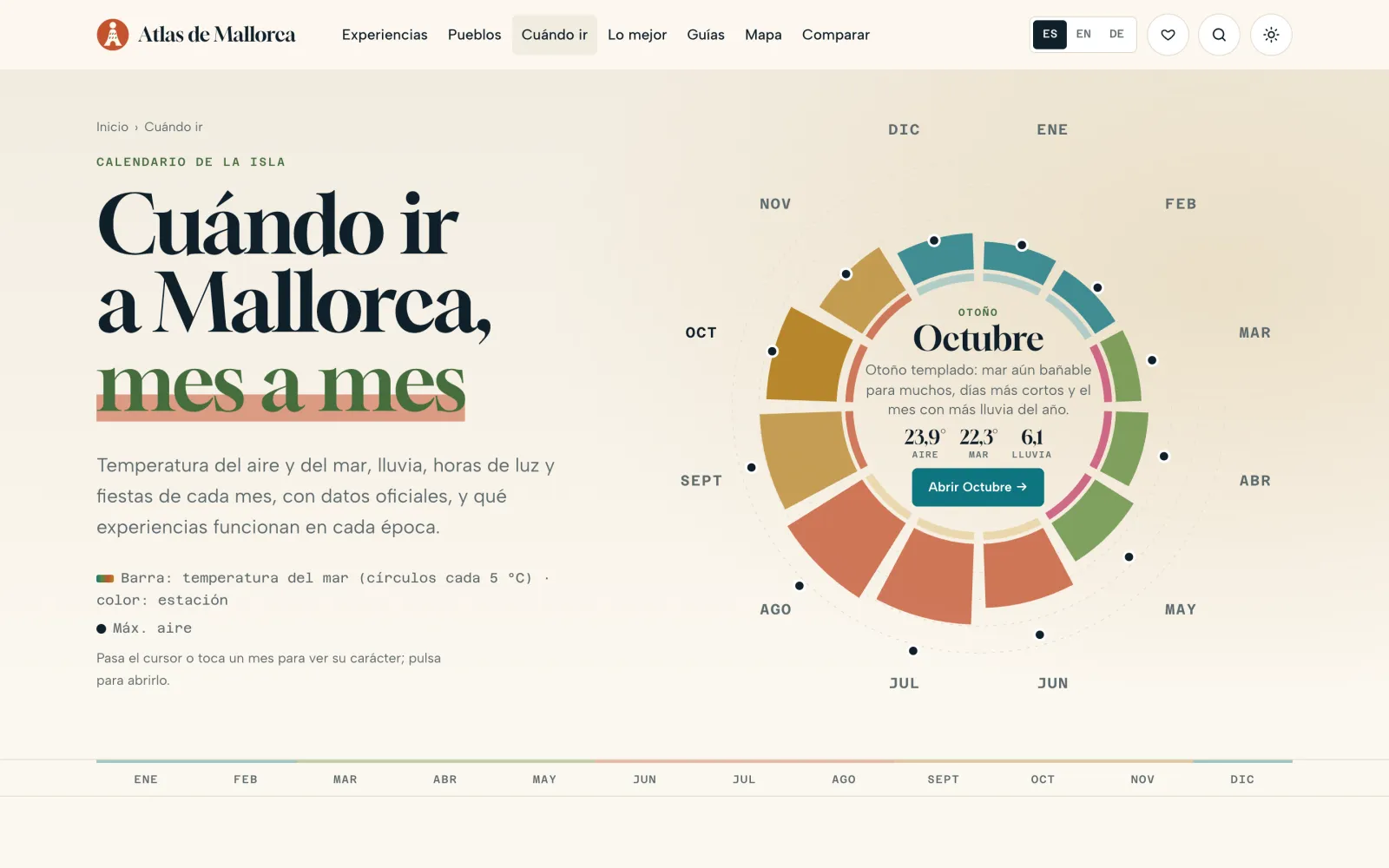
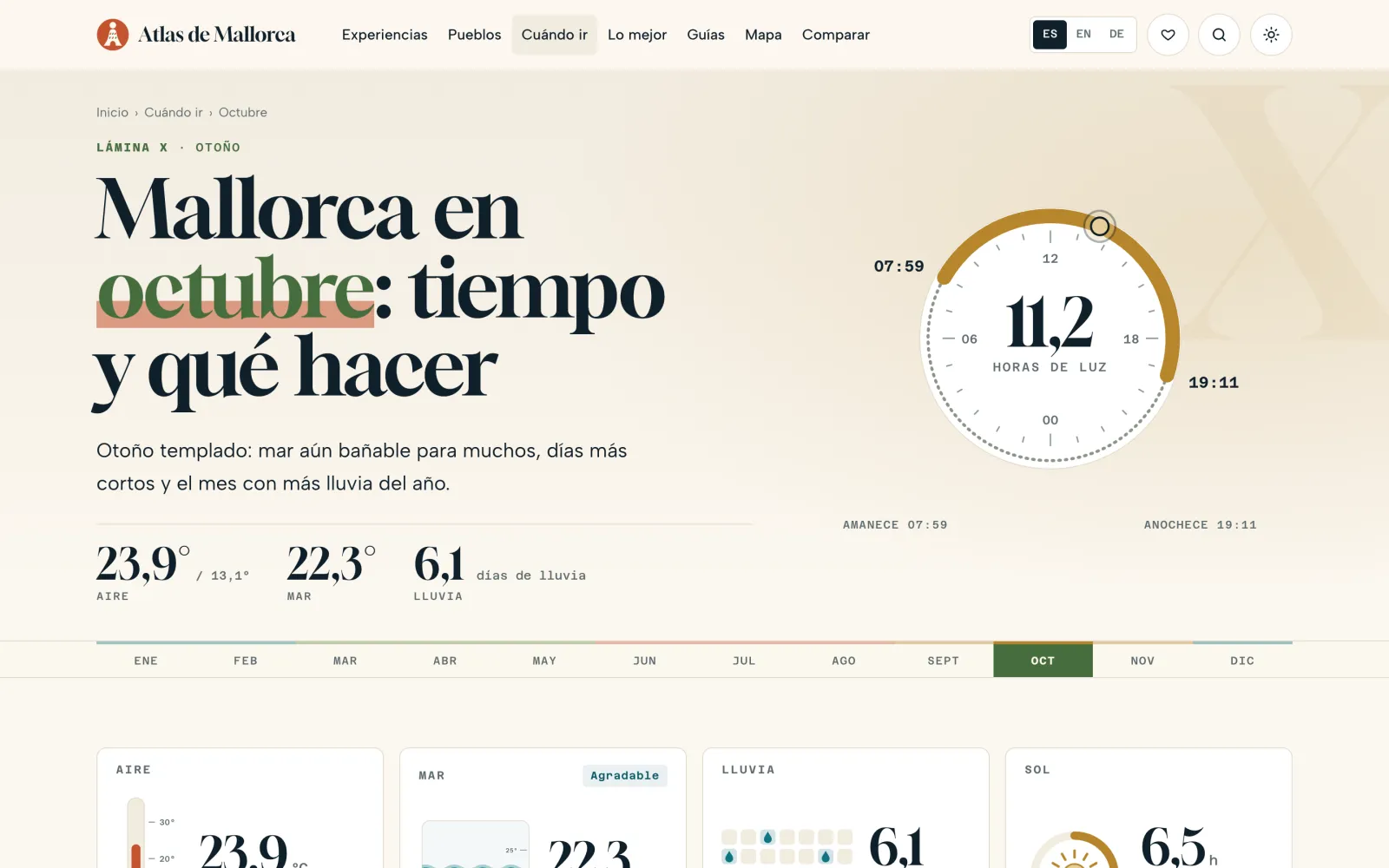
The island, month by month
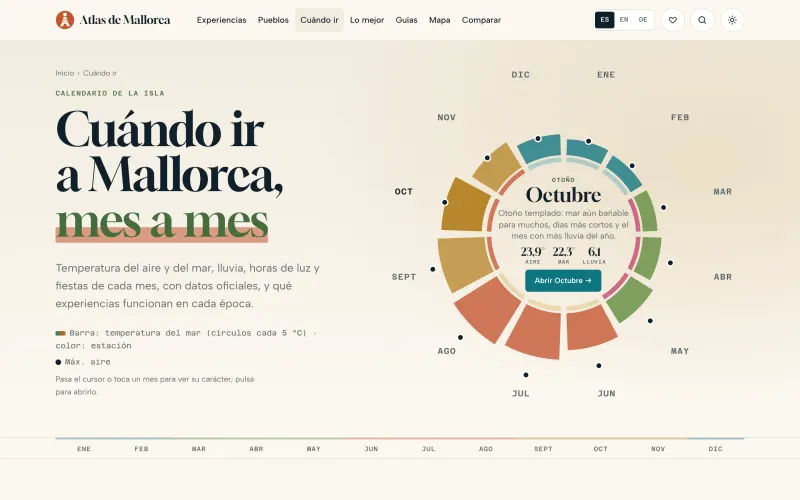
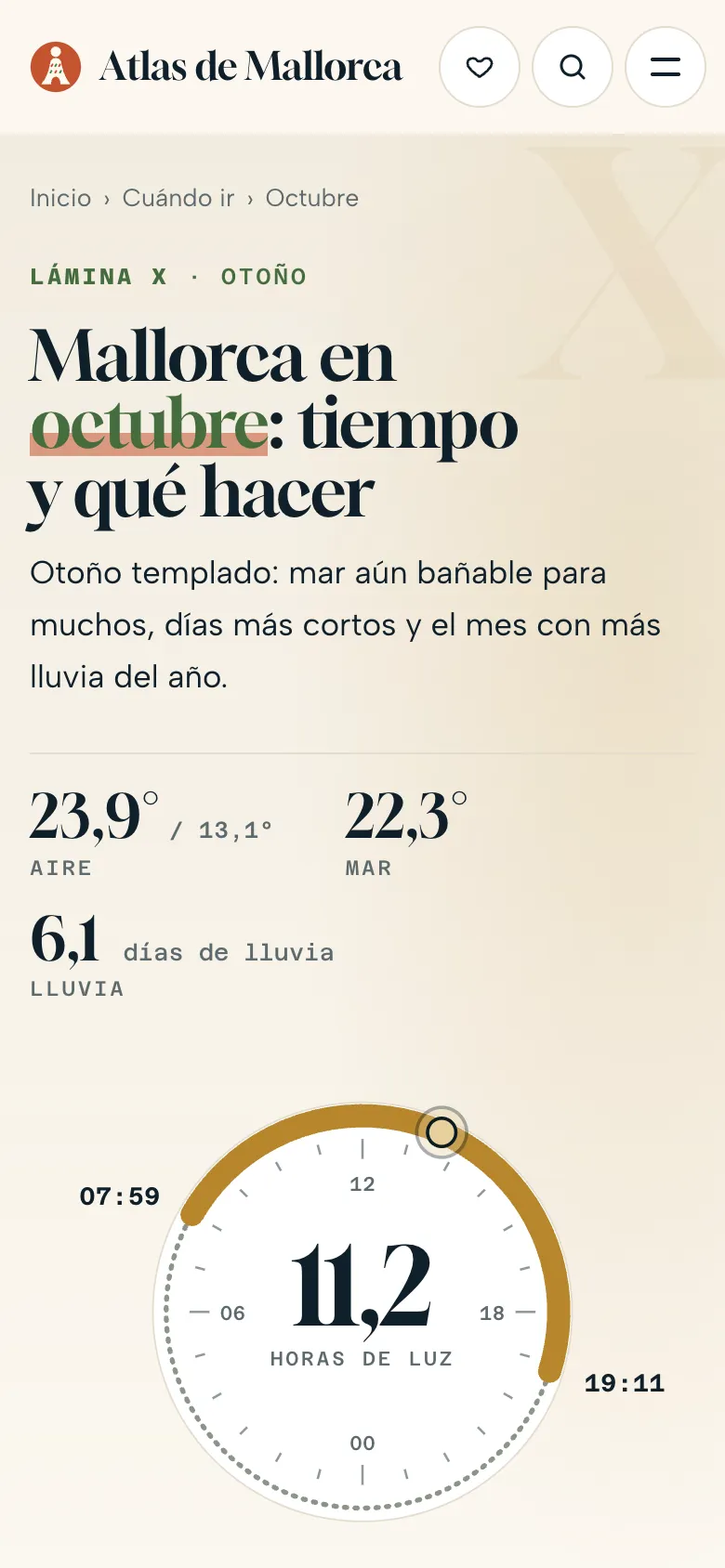
A wheel with all twelve months and climate data from AEMET and NOAA: air and sea temperature, rain and daylight hours. Plus local festivals and which experiences work best in each season.
-
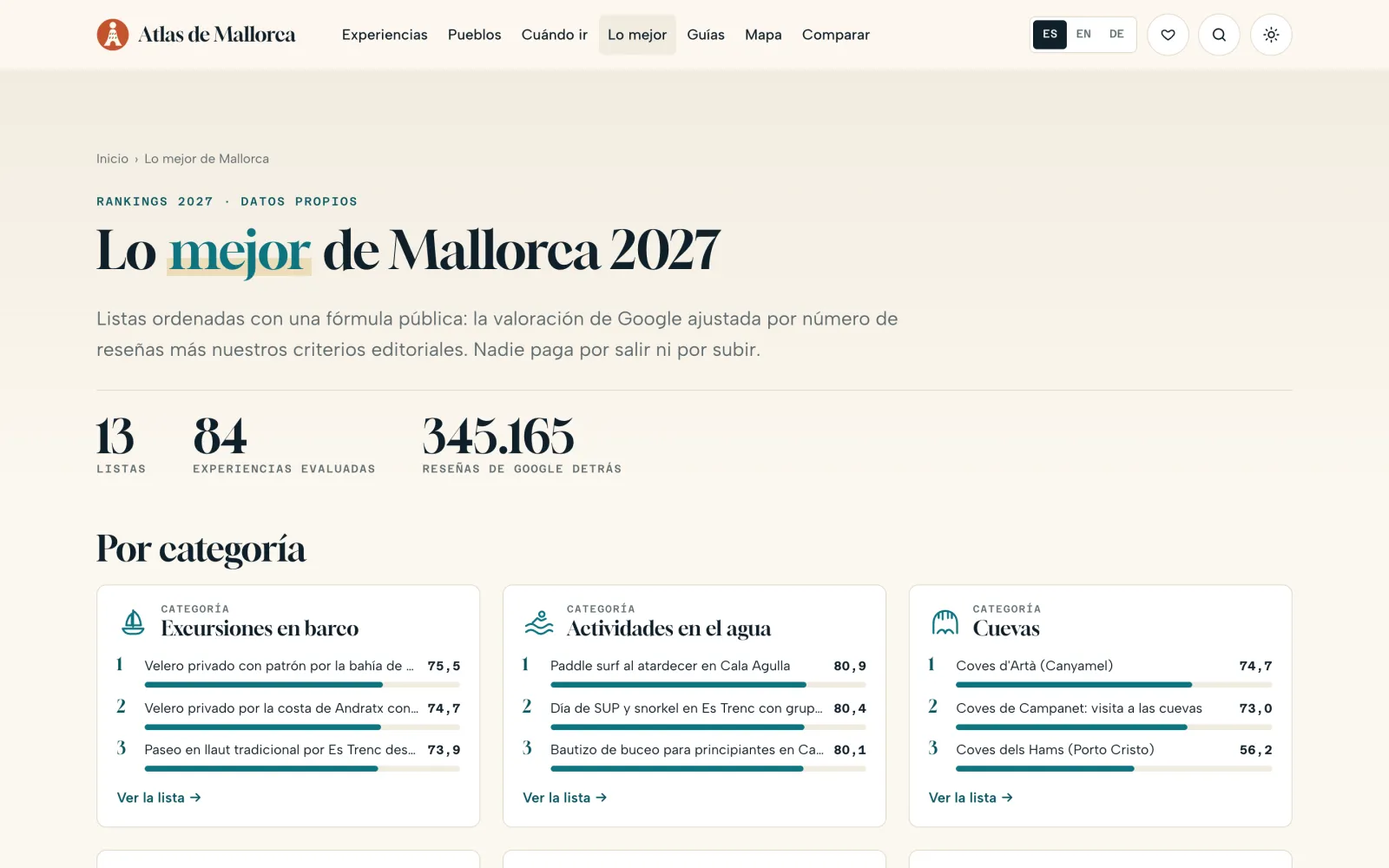
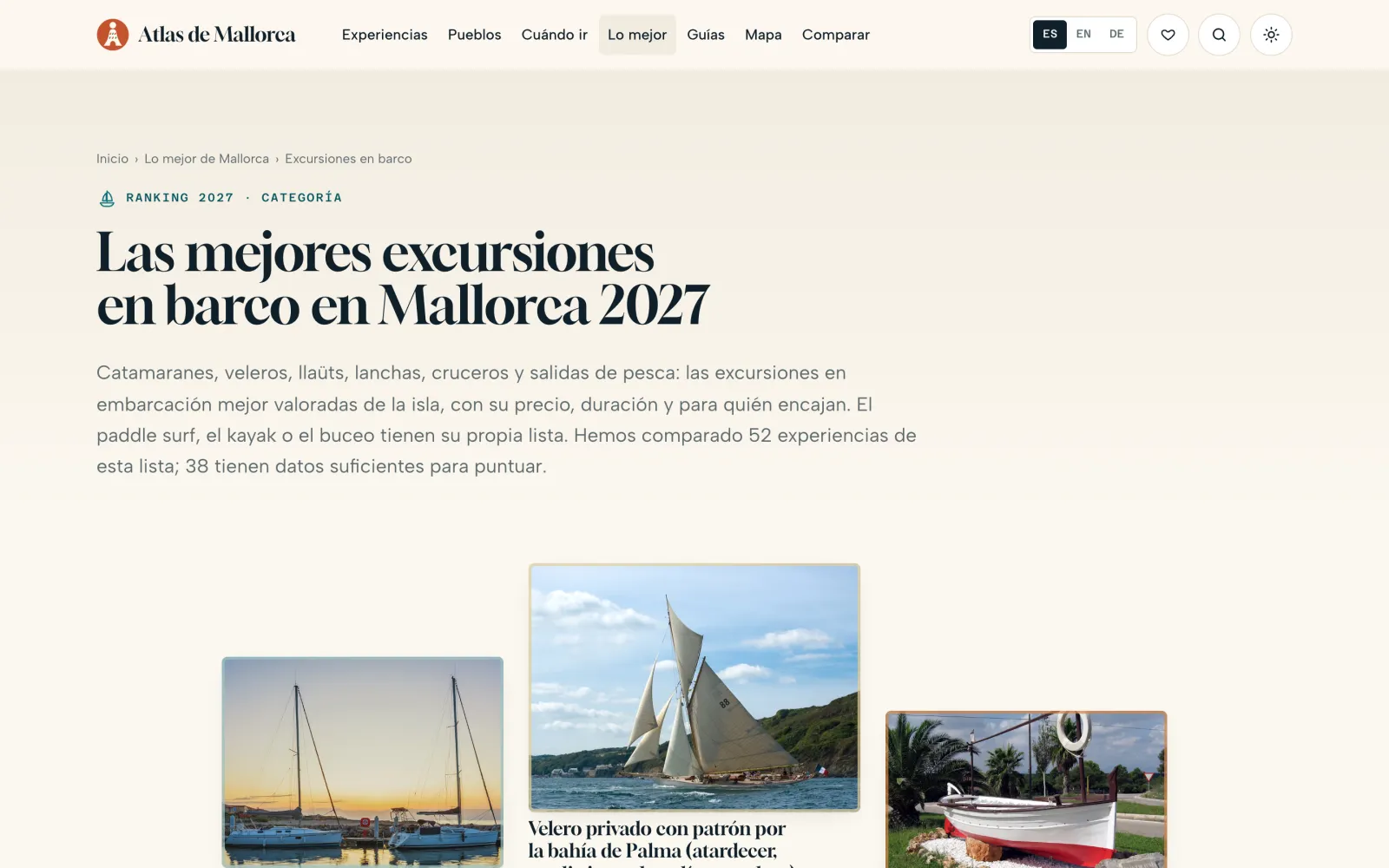
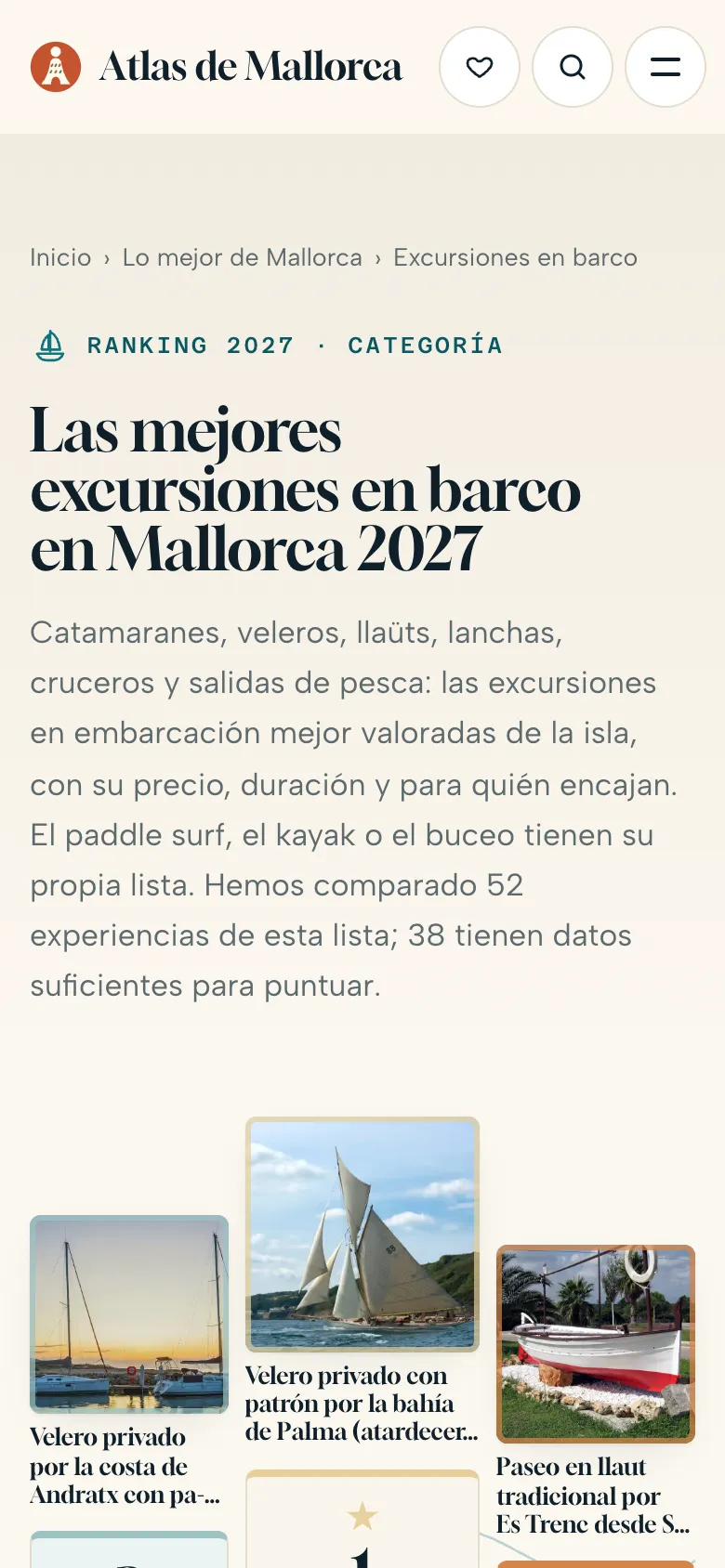
13 rankings with a public formula
Lists by category and by type of plan (with kids, at sunset, rainy day), ordered by a formula anyone can look up.
-
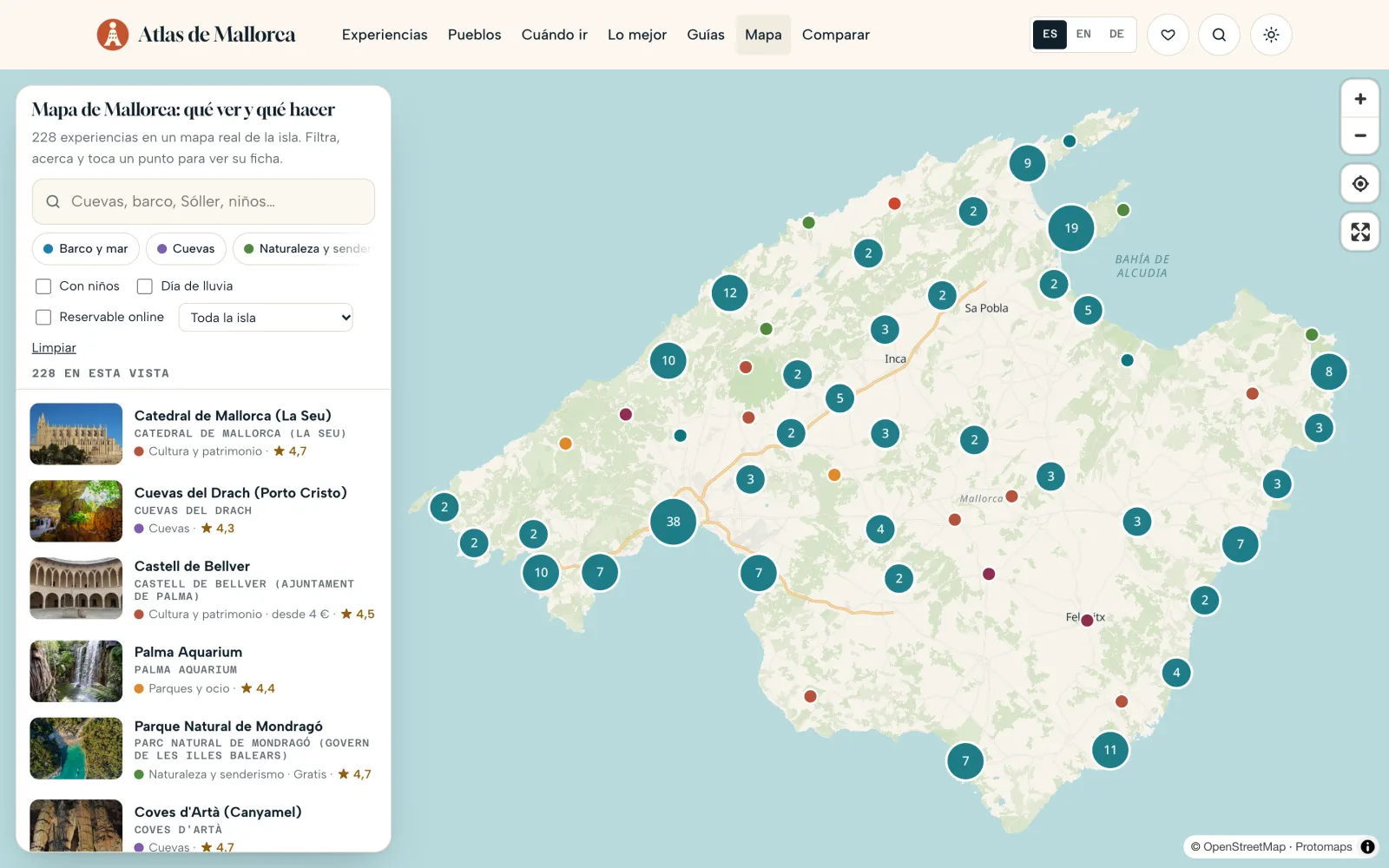
Everything on one map
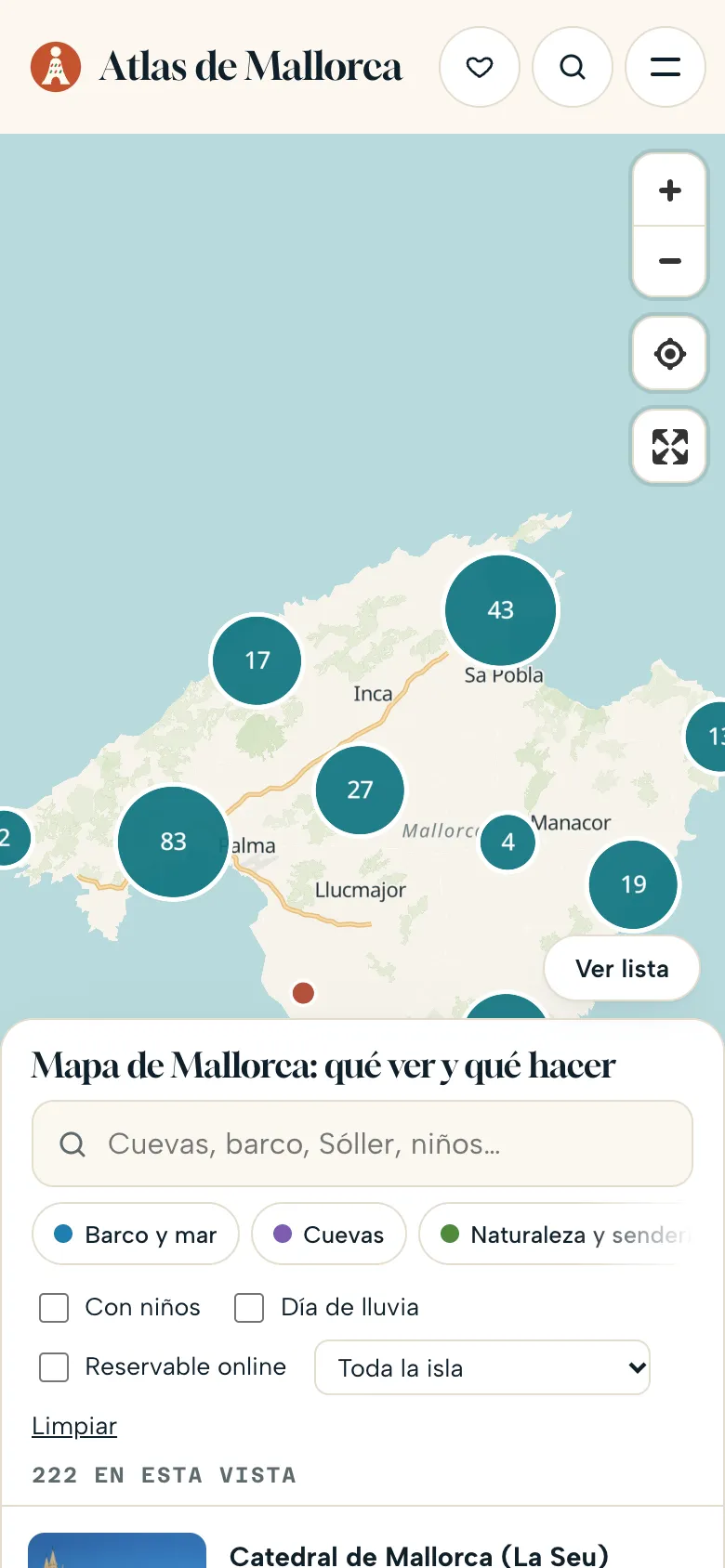
Every experience on a vector map of the island, clustered by area, with filters and a list that updates as you move around the map.
-
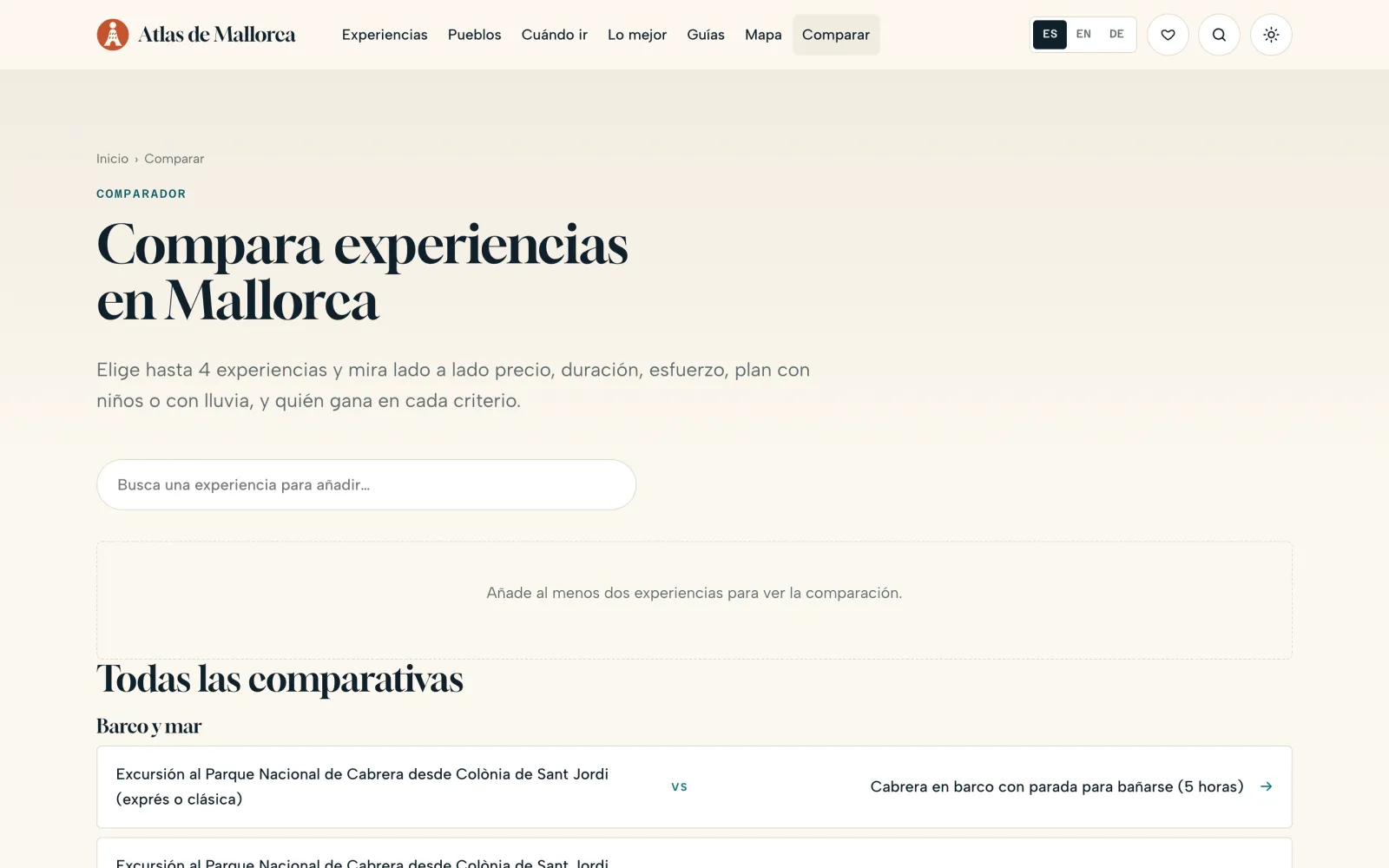
Up to four, side by side
The comparison tool puts up to four experiences head to head on price, duration, effort, kids and rain, and shows which one wins on each point.
And also
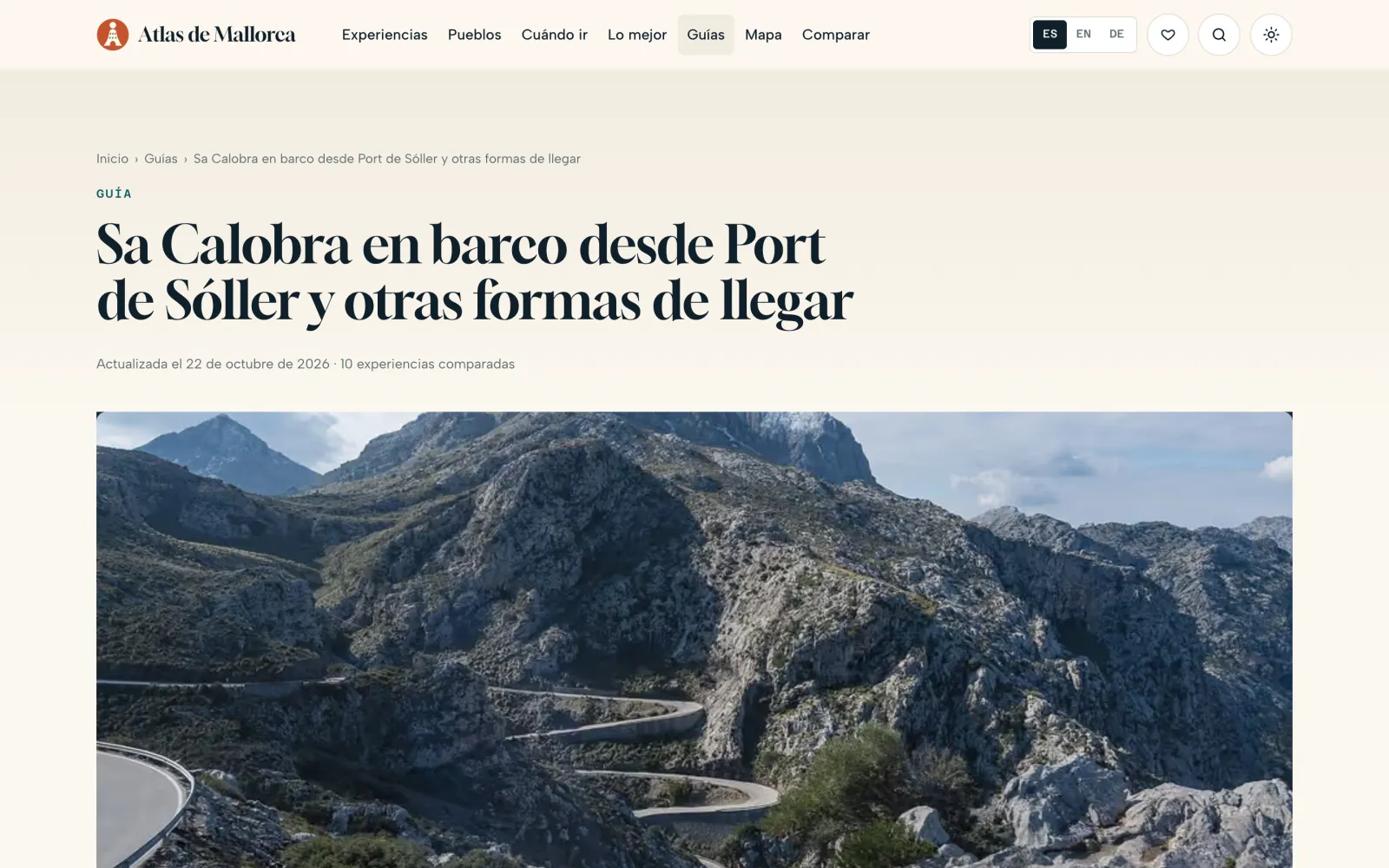
- 13 guides: Sa Calobra by boat, Cabrera, the Sóller train, Mallorca with kids…
- Booking on GetYourGuide, Viator or Musement from the listing, in each visitor's language
- For the trip: accommodation by town, car hire and airport transfers
- A travel notebook with 53 stamps, one per municipality
- “My plan”: trip favourites, no account needed, shareable with a link
- A page for every operator, with all its experiences
- Public methodology and a credit for every photo
Data
Every figure says where it comes from
Ratings, opening hours, phone numbers and photos for each business come from the official Google Places API and are refreshed every month: 181 of the 228 listings already have them. Photos of places come from Wikimedia Commons, credited with author and licence. And when a figure is missing, the site says so instead of making it up.
The 13 rankings follow a public formula: the Google rating adjusted for the number of reviews, plus editorial criteria explained on the methodology page. Nobody pays to be listed or to move up.
Programmatic SEO
Over a thousand pages, each answering a search
Every experience, town, month, ranking, guide and comparison is a page of its own, generated from the same data and written for what people actually search for: “what to do in Mallorca when it rains”, “boat trips”, “Sa Calobra by boat”. In three languages: 1,356 pages in the sitemap, with hreflang and breadcrumbs.
Each page carries its structured data in a single graph (TouristTrip, LocalBusiness, FAQs…), validated on every release, and the site offers llms.txt and an open JSON feed so AI search engines understand it and cite it correctly.
Bespoke product · Dashboard and “Brain”
A dashboard that publishes on its own
Behind the website sits a private dashboard to run the directory. Every change is saved as a version on GitHub, and the site is validated, rebuilt and published automatically in about a minute.
-
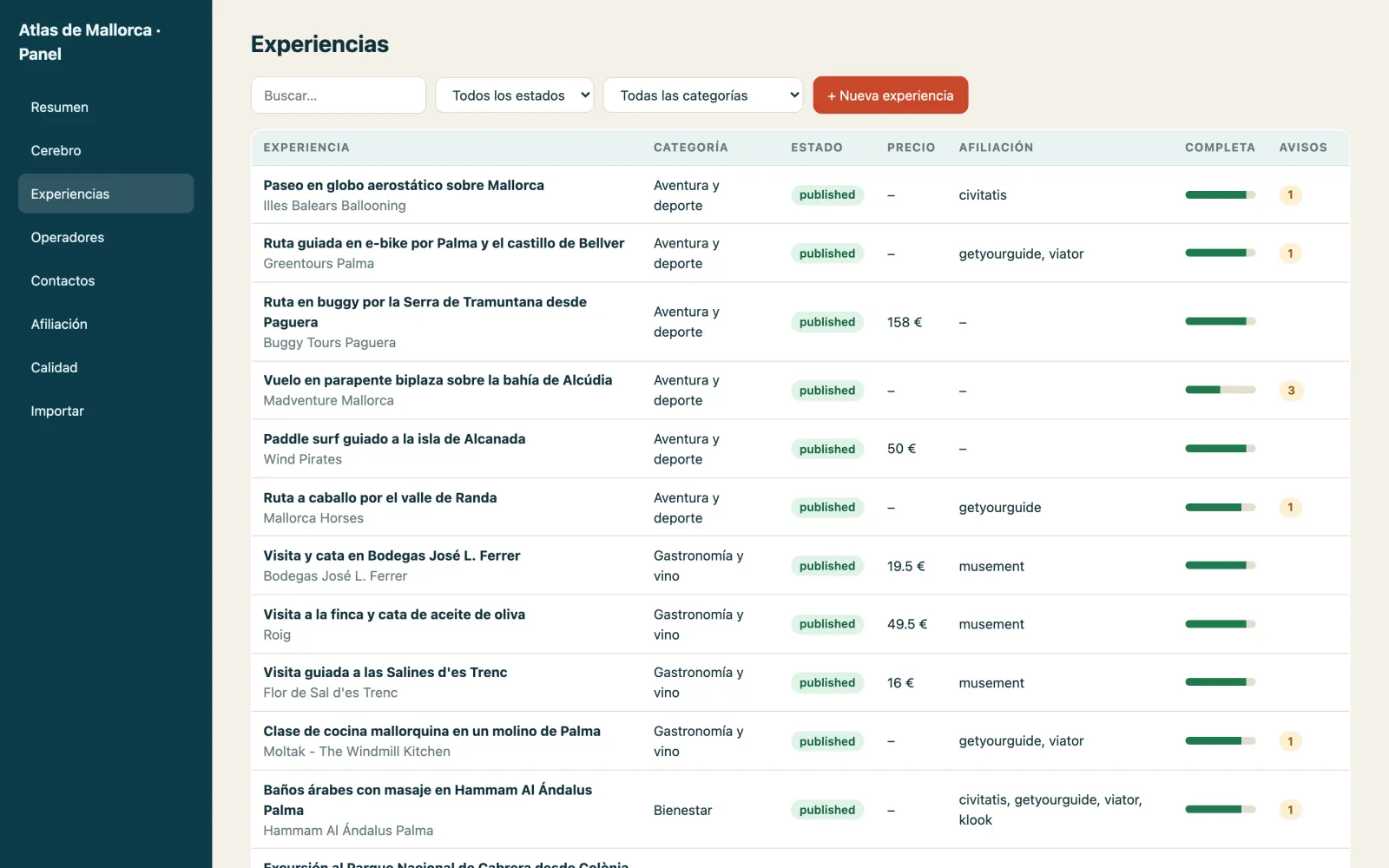
The experiences
Every listing in one table, with its status, price, where it can be booked and a bar showing how complete it is.
-
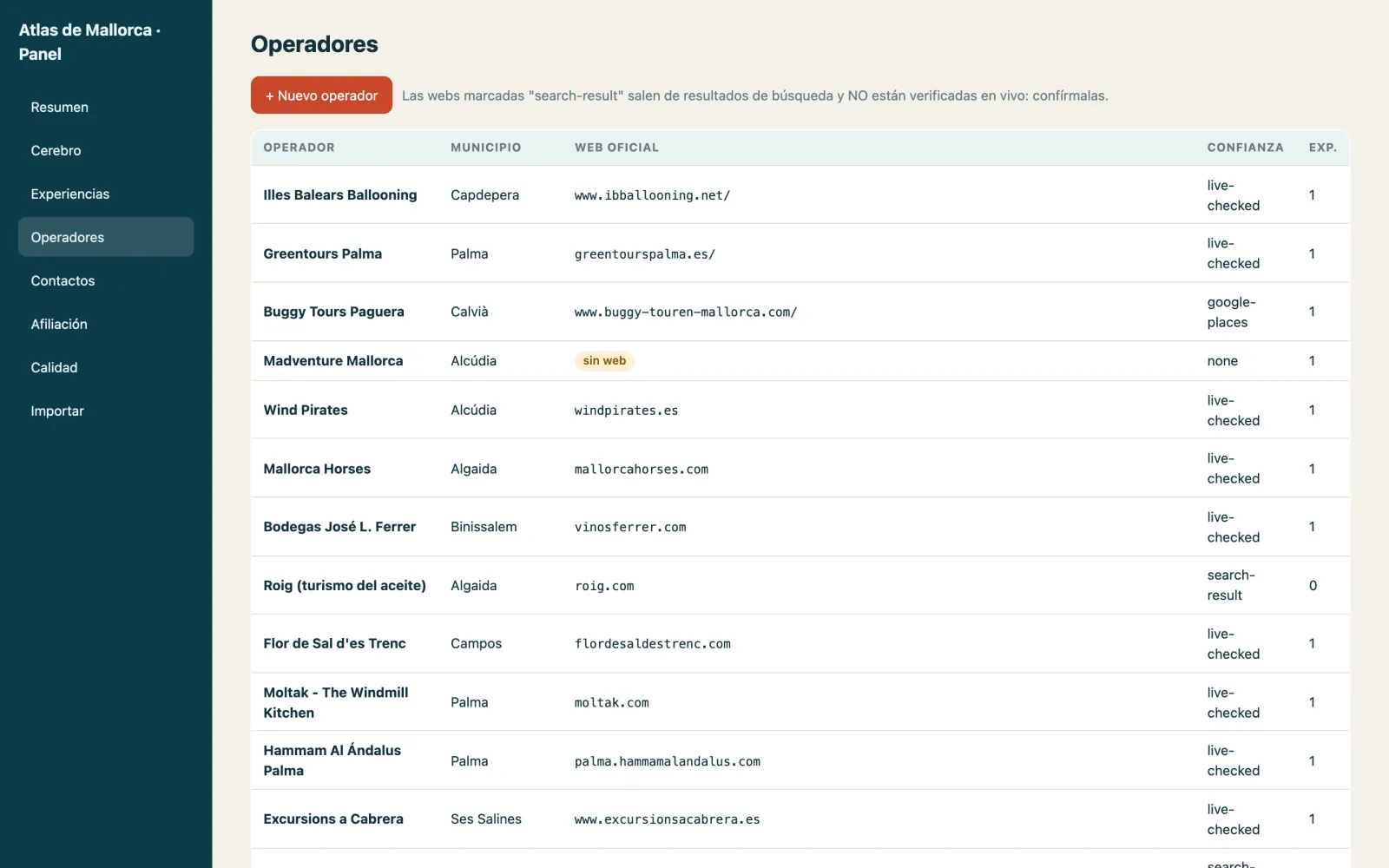
The operators
Each operator with its town, official website and how reliable that is: checked live or taken from a search.
-
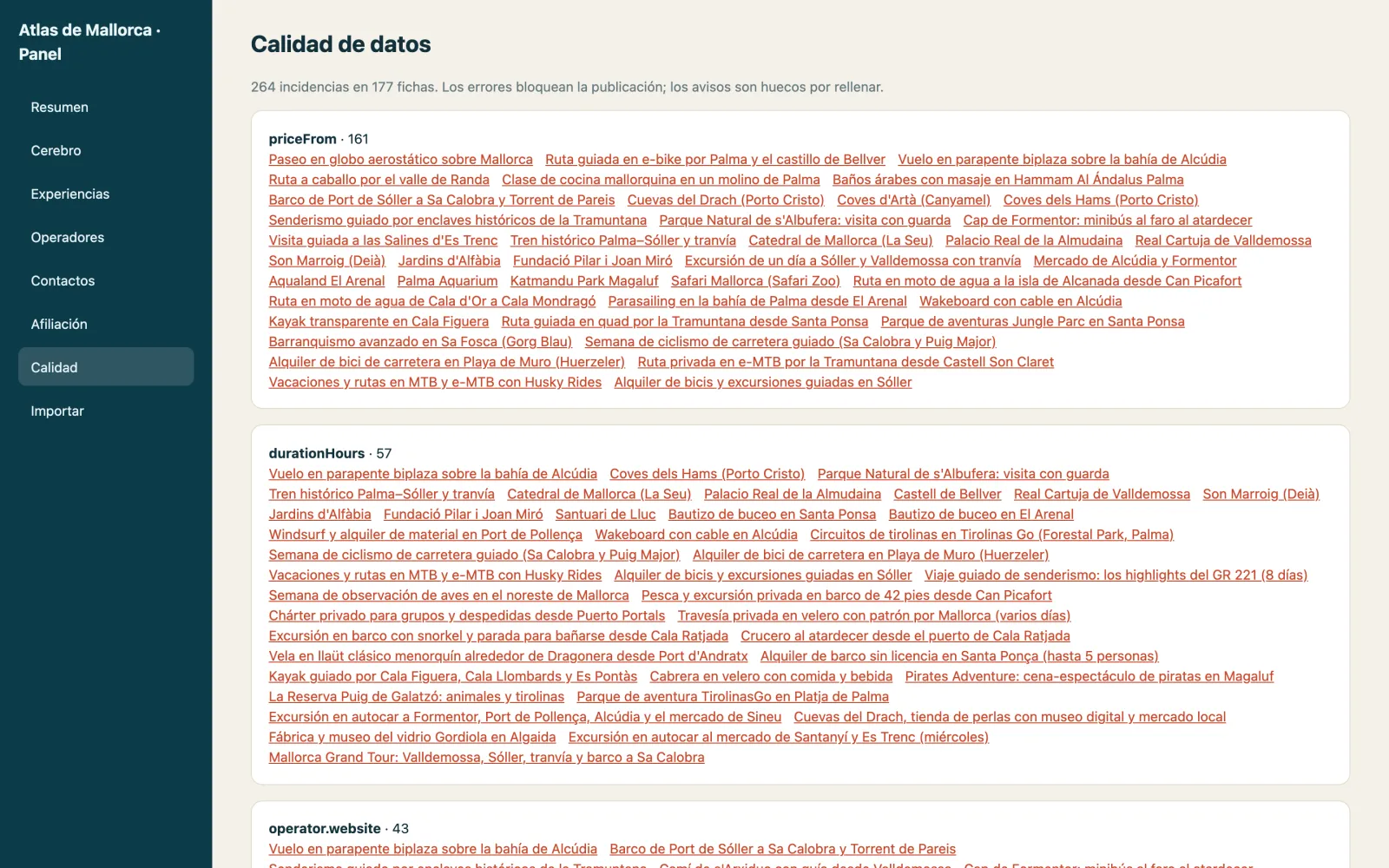
Data quality
A check that flags what each listing is missing (price, duration, website) and blocks publishing when there is a real error.
-
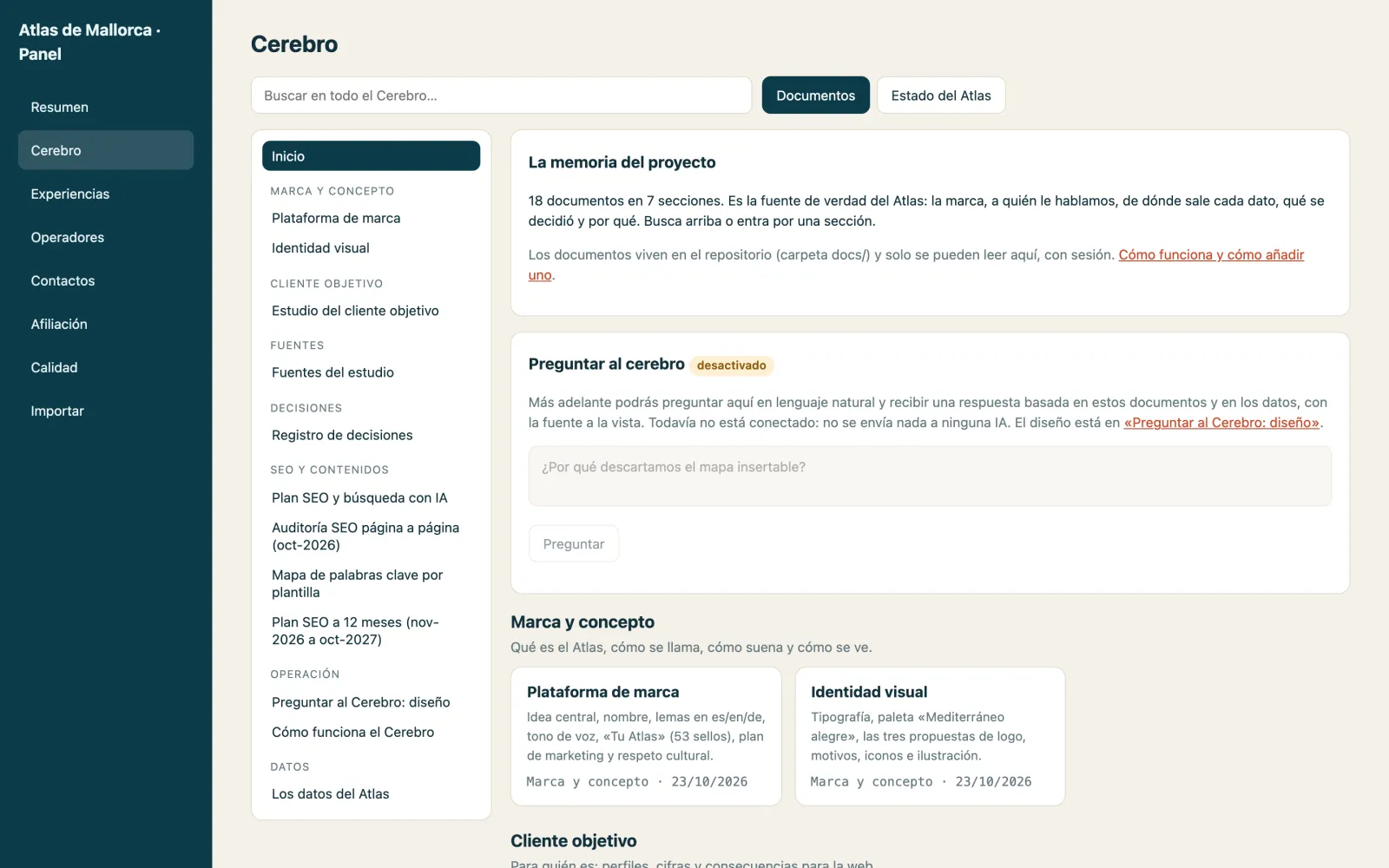
The “Brain”
The project's memory, in the same dashboard: the brand, who we are talking to, where each figure comes from and every decision with its reasoning.
-
Live status
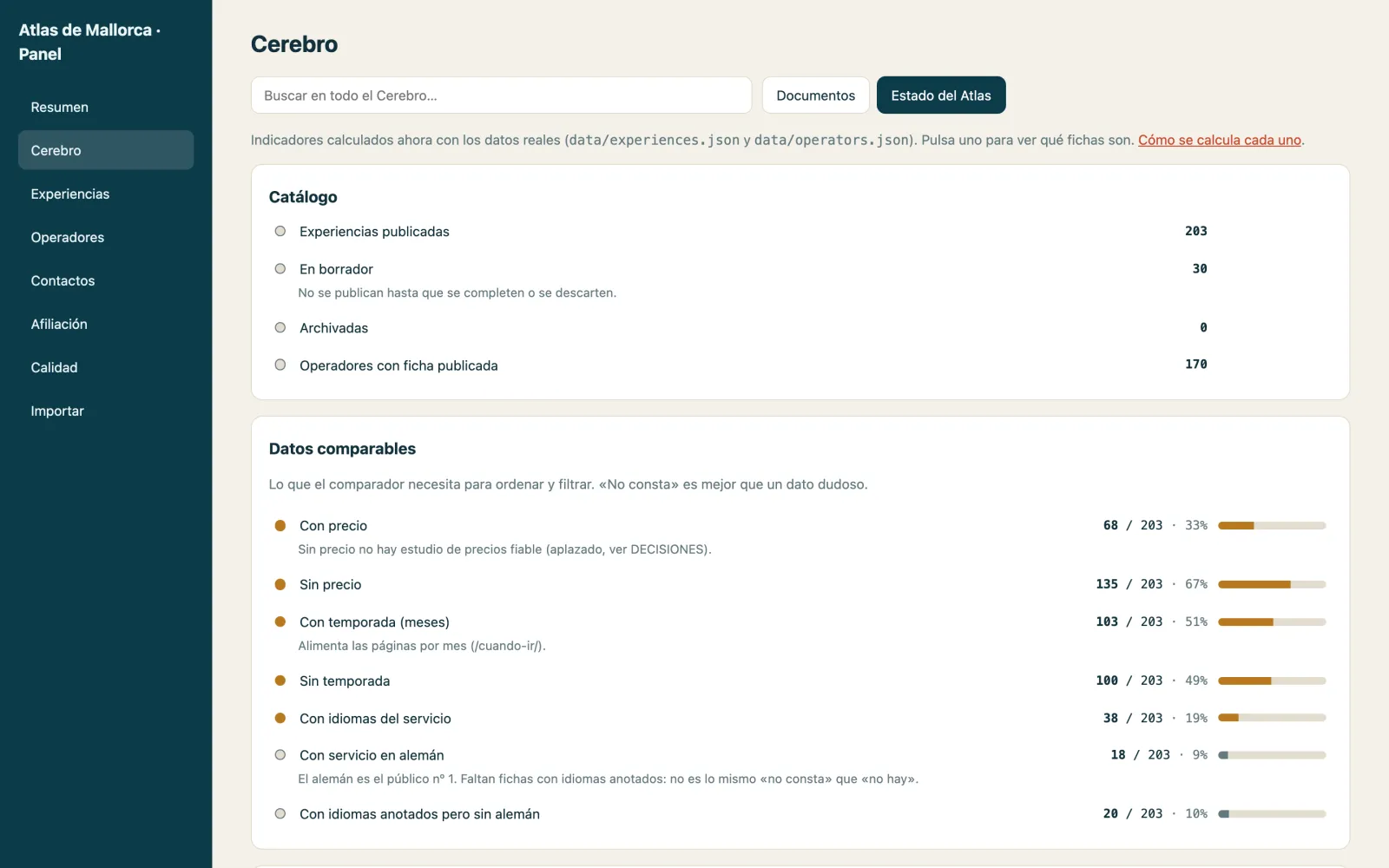
“Atlas status” uses the real data to count how many listings are published and how many have a price, season or languages, so we know what to improve.
And also
- A reader with a table of contents for every document and a search across all of them
- Every change is saved as a version, with its history
- An automatic review every month: websites down, closed businesses and broken affiliate links
- Google Places data refreshes on its own every month
Screenshots of the dashboard running locally, with the Atlas's public data.
The model
Independent, with a clear model
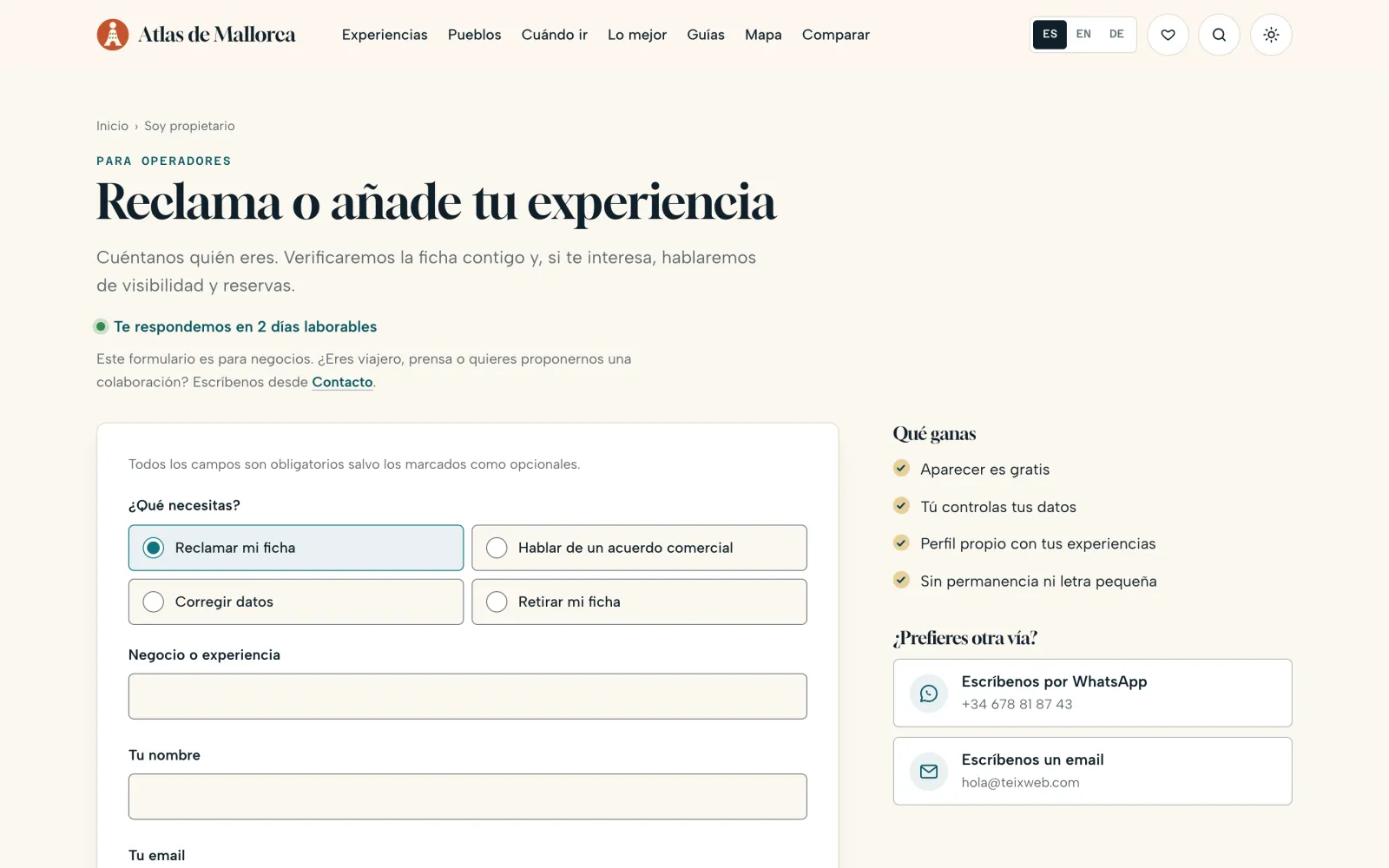
Atlas neither runs nor sells experiences. It is funded by affiliate links (GetYourGuide, Viator, Musement, Booking…), always labelled as such. And through “I'm the owner”, every business can claim its listing, correct it or ask for it to be removed: being listed is free, with no commitment.
How it looks
More pages of the website, on desktop.
Just as carefully made on mobile
Most visits come from a phone, so every page was designed to read well there too.
Fact sheet
- Client
- Atlas de Mallorca
- Sector
- Tourism and leisure
- Year
- 2026
- What we did
- Brand · Design · Development · Data · Programmatic SEO · Management dashboard
- Technology
- A bespoke static site generator in Node.js, with no frameworks or production dependencies; a PHP dashboard that saves every change to GitHub and publishes automatically
- Data
- Google Places API (ratings, hours and photos, monthly), Wikimedia Commons, OpenStreetMap and climate data from AEMET and NOAA
- Languages
- Spanish, English and German: 1,356 pages in the sitemap, with hreflang
- SEO
- Pages per experience, town, month, ranking and guide; graph-based JSON-LD validated on every release; sitemap, llms.txt and an open feed
- Performance
- Static HTML, AVIF and WebP images in several sizes, self-hosted fonts and the interactive map only on its own page
Teix Web Studio · Palma
Shall we talk about your project?
Tell us what you need. In a 20-minute call we'll work out where to start, no strings attached.
or use the contact form →Keep exploring
More work